


In a way, he is teaching us how to process information and facts and intuition, how to put them together, how to change your perspective, because really how does one go about doing that - changing a perspective as if it was like changing a light bulb? The journalist doesn't just hand the expose to us and admonish, instead he leads the audience gently to epiphany, teaching the reader how to learn, how to warp our own ingrained perceptions, so that the insights are exposed.
"I cannot conceive of a god who rewards and punishes his creatures or has a will of the kind we experience in ourselves. Neither can I nor would I want to conceive of an individual that survives his physical death; let feeble souls, from fear or absurd egotism, cherish such thoughts. I am satisfied with the mystery of the eternity of life and a glimpse of the marvellous structure of the existing world, together with the devoted striving to comprehend a portion, be it ever so tiny, of the Reason that manifests itself in Nature." --Albert Einstein

After finishing first, Terminal World, by Alistair Reynolds and then, All the Windwracked Stars, by Elizabeth Bear, I realized that both novels are much of the same. Meaning... In the aftermath of apocalypse (or several, as in the case of Bear), on a foregone, poisoned planet (a pseudo Earth), humankind, or a mutated semblance of such, clings wretchedly to life in concentric rings around the epicenter of remaining civilization, a polyglot construction of such towering proportion, hubris, and deterioration, that any comparison registers only, of course, to Baruch's Babel. Reynolds and Bear tend to view their city (not the only, but the only one remaining) as a retreat from the devastation of man, though obliquely because such devastation is always wrought by man as god rather than mortal. God, Him/Herself, is reliably absent and his punishment is meted out as provident punishment.
Thus, Bear's world is haunted by fallen angels, models of perfectly flawed human beings and broken reincarnations of their former selves, condemned to wander the poisoned planet in a self imposed exile for their sins. In contrast, Reynold's angels live at the very top of the city, a symbol both of aspiration and oppression to their less fortunate peers at the bottom. The location of their aerie in the stratosphere both metaphorically and technologically mirrors the belief that evolution equals superiority equals the status quo. Both stories emphasize the disparity of the haves and have-nots from a determinist view of biology, location, and circumstance trumping personal endeavor. There's a top down approach to the devastation, recalling the totalitarian social programs of the Modernists gone awry, the imperfect results of a major social experiment gone out of control.
The inevitably scourging of both worlds is credited to the well intentioned but ultimately inadequate plans of those that decide (makers with small M), an apology of sorts for cultural hubris, as well shabby execution by the rest of us ignorant plebes. However, despite the allure of technological innovation and starting from square one to set things right, the narratives' main allure originates from an evaluation of what advancing socially and technologically actually means to us. Accordingly, I'm coming to see Steampunk (or in Bear's case, Steampunk-esque) as more than simple revisionist fantasy. Rather it is important that the fallout of our industrialization is conveniently wiped away and the memory of describing Asians as Oriental have been erased. Those holes in the narrative fabric of Steampunk act as gauge, measuring what "progress" actually means; which human programs have come out intact, why we ever needed them at all, and what we regret of our history. While there is a sense of willful nostalgia that exists like a layer of ornamental tarnish over the basic mechanism of Steampunk, these two authors have obviously picked up on the importance of that tarnish as an opportunity to evaluate social decay as malaise. If the victors get to rewrite history, they can never completely erase it. Steampunk gives the survivors an opportunity to address the interstitial space that cannot quite be explained away.
Thus, Bear's world is haunted by fallen angels, models of perfectly flawed human beings and broken reincarnations of their former selves, condemned to wander the poisoned planet in a self imposed exile for their sins. In contrast, Reynold's angels live at the very top of the city, a symbol both of aspiration and oppression to their less fortunate peers at the bottom. The location of their aerie in the stratosphere both metaphorically and technologically mirrors the belief that evolution equals superiority equals the status quo. Both stories emphasize the disparity of the haves and have-nots from a determinist view of biology, location, and circumstance trumping personal endeavor. There's a top down approach to the devastation, recalling the totalitarian social programs of the Modernists gone awry, the imperfect results of a major social experiment gone out of control.
The inevitably scourging of both worlds is credited to the well intentioned but ultimately inadequate plans of those that decide (makers with small M), an apology of sorts for cultural hubris, as well shabby execution by the rest of us ignorant plebes. However, despite the allure of technological innovation and starting from square one to set things right, the narratives' main allure originates from an evaluation of what advancing socially and technologically actually means to us. Accordingly, I'm coming to see Steampunk (or in Bear's case, Steampunk-esque) as more than simple revisionist fantasy. Rather it is important that the fallout of our industrialization is conveniently wiped away and the memory of describing Asians as Oriental have been erased. Those holes in the narrative fabric of Steampunk act as gauge, measuring what "progress" actually means; which human programs have come out intact, why we ever needed them at all, and what we regret of our history. While there is a sense of willful nostalgia that exists like a layer of ornamental tarnish over the basic mechanism of Steampunk, these two authors have obviously picked up on the importance of that tarnish as an opportunity to evaluate social decay as malaise. If the victors get to rewrite history, they can never completely erase it. Steampunk gives the survivors an opportunity to address the interstitial space that cannot quite be explained away.

Castle himself, gets the bulk of our attention, turning his relationships with supernaturally goody goody daughter and self absorbed actress mother into murder case resolving insights. Fillion, perfect in the role of charming rake, is a rarity, a handsome man with lots of personality, and the directors exploit his comic timing to fantastic effect in what is essentially a funny show about violent death. Accordingly, the writer know their strengths and give us fans a lot of service. For instance, Fillion's appearance in the space cowboy costume of one Malcolm Reynolds for the Halloween episode, and his steam-cyber arm on season 3, episode 4 "Punked" as in "steam-punked". In an installment where Castle conjectures that an antique bullet might in fact be evidence of a time travel murder, the writers have the victim driving a cosplay Delorean. Gotta love that attention to detail, the irreverent reverence to subcultural phenomenon, and the nicely wrapped package.
Despite the moderator's attempt to steer the discussion towards a mundane dissection of undergraduate level humanities theory, New York Times writer, Cathy Horyn, managed to land a few gems on the topic of critical thinking and fashion during yesterdays installment of Stanford Humanities Department Arts Critics in Residence Series.
Horyn, breaking from dated women's wear reporting of fashion, ascribes her critical style to the demands of the designers themselves. In the 90's, supplanting the relatively easier to understand world of Vogue reportage that included heritage designers such as Yves Saint Laurent and Calvin Klein with his wildly accessible marketing campaign, was an era of "difficult" clothes, conceptual garments that virtually that insisted upon intellectually driven discussions post runway.
 Some examples: Rei Kawakubo's "lumps and bumps" grotesquery, the Japanese designer envisioning the 21st century silhouette that referred to our mobility, phones and backpacks included; the Belgian avante garde; Chalayan's deconstruction of the body as habitat; the work of stylists delving into street and grunge, or the unique eye of Helmut Lang that diverged from New Look and classic Haute aesthetic manner of seeing. Such defiance of fashion mandate in favor of individuality, encouraged avant garde designers to explore self-conscious expression and process technical inquiries in public view as finished product.
Witness the late Alexander McQueen, who combined technology and modernity with the personal that resulted in an artist's rendering of madness and death. He applied these themes not only to the way garments were worn, but how they were constructed. Each collection begged dissection in terms of cultural meaning, not simply, "What is beautiful now?" but also "What is femininity?" And fruitful discussion required the same language used to understand iconic art pieces.
Elaborating on the way technology has transformed fashion writing, Horyn describes the liberation of a journalist from deadlines and page limits through the advent of blogs. The freedom of occupying a new conversational space with the reader - one in which the instantaneous nature of blogging performs a "stream of conscious[ness]" relationship between the meta muse of theory, current events, tv, and celebrity - offers up a kind of mirror for the ephemeral nature of fashion itself while engendering a similar brevity in content. Although people tell Horyn that they are hungry for depth and detail, publishers and marketers continue to argue that consumers want pictures and loath language. Such emphasis on speed and soundbytes, a new kind of working mode that hearkens back to the pre-institution of big media itself, has replaced classic narrative reportage and effectively diminished the kind of critiques that elevated the work of fashion in previous decades. Pressure to compose concise quips drives a quantitative over qualitative approach to talking about fashion.
On the implications of Twittering...
But if information has become shallower, so too fashion as it becomes broader. Horyn points out that globalization tends to cater to globalization rather than regionalism and that despite the number and scope of proliferating runway shows in every country, western aesthetics continues to dominate. To aggravate the trend, designers have opened their runway shows as direct buy web shops, designing easy-to-fit, wearable clothes with wide reaching appeal. The paradigm of the couturier, the designer as artist, lapses into oblivion as a confluence of economic factors limits truly innovative creativity in the face of financial risk.
 Over time, Horyn has come to define herself as anti-commerce, because the runway has become, or perhaps returned to being, a promotional tool rather than a forum for challenging ideas. But if fashion critique has declined, it's because fashion itself has become less challenging. The contemporary industry, she intimates, is consolidating and reductive, show over substance, veering away from the notion that clothes matter over presentation. We are full circle from what's new, to what's IN. Horyn admits that a good show still has relevance, the ability to cultivate an aura of milieu as Galliano did with his "Twins" motif. She states that designers have a keen eye for when a difficult concept can be presented. But these are not those moments, and the days of McQueen "having something to say" with and about the staging a live stream show are perhaps over, or at the very least, out of fashion.
Horyn reminds us that for all its transient nature, the real impact of a fashion moment is something gradual and almost primeval, an evolutionary process of ideas that proliferate over time. For instance, how Raf Simmons redefined a generation of menswear, or how Margiela's minimalism has permeated our approach to modern dressing. Those insights are a blip glossed over by the propulsive forward thrust of technology. The reporter's task according to Horyn, is to take a mundane observation, and then scribe a cogent, contextualized response that helps us understand who and where we are.

 On a personal level, I came to fashion awareness during the apparently halcyon days of high concept. Perhaps I didn't fully understand Rei Kawakubo's bumps, nor all of Chalayan's references at the time, but the aesthetic of the Japanese Avant garde, Ackerman's subdued constructivism, Australian-Japanese Akira Isogawa's beautiful cross cultural textiles, and McQueen's tortured elegance were instilled early on. Their sensibilities mirrored my awe and aversion to the Town and Country elitism of the old Haute, scrambled the body centric ideals to which my awkward teenage form could never compare, transcribed all the nascent rebellion and geeky glasses modern artsy-ness that I couldn't express. After more recent seasons of boredom -costume lady edwardian dressing, Project Runway, retro pastiche, return of the pretty, preppy, and wandering through the shops not falling in love with anything - Horyn made me realize my longing as a case of "It's not me, it's them". If not for my slim wallet and my no place to go, I would have slung a piece of avant art on my body long ago. As things lie, suitably professional or California beach bum defines what some would call a "wardrobe". Not a lot of designers sell avant on the rack. But behind all the t-shirts and jeans, a coveted bottle of Alexander McQueen fragrance is hidden in my closet. If his creations aren't actually advertised by my actual corpus, I ought to display that cracked heart in the open as a reminder to stick by my instincts and be brave otherwheres.
On losing weight, deconstructing and reconstructing perspective on fashion, inhabiting the body and ostensibly, participating in the decisions that are your life...
Random Notes:
2000 - McQueen in tandem with Chalayan. Apocalypse.
loss of individuality
constructed identity
buyer performs the clothes
death of the author
Horyn, breaking from dated women's wear reporting of fashion, ascribes her critical style to the demands of the designers themselves. In the 90's, supplanting the relatively easier to understand world of Vogue reportage that included heritage designers such as Yves Saint Laurent and Calvin Klein with his wildly accessible marketing campaign, was an era of "difficult" clothes, conceptual garments that virtually that insisted upon intellectually driven discussions post runway.

"I want to be the real 21st century designer." --Alexander McQueen as related by Cathy Horyn.
Witness the late Alexander McQueen, who combined technology and modernity with the personal that resulted in an artist's rendering of madness and death. He applied these themes not only to the way garments were worn, but how they were constructed. Each collection begged dissection in terms of cultural meaning, not simply, "What is beautiful now?" but also "What is femininity?" And fruitful discussion required the same language used to understand iconic art pieces.
Elaborating on the way technology has transformed fashion writing, Horyn describes the liberation of a journalist from deadlines and page limits through the advent of blogs. The freedom of occupying a new conversational space with the reader - one in which the instantaneous nature of blogging performs a "stream of conscious[ness]" relationship between the meta muse of theory, current events, tv, and celebrity - offers up a kind of mirror for the ephemeral nature of fashion itself while engendering a similar brevity in content. Although people tell Horyn that they are hungry for depth and detail, publishers and marketers continue to argue that consumers want pictures and loath language. Such emphasis on speed and soundbytes, a new kind of working mode that hearkens back to the pre-institution of big media itself, has replaced classic narrative reportage and effectively diminished the kind of critiques that elevated the work of fashion in previous decades. Pressure to compose concise quips drives a quantitative over qualitative approach to talking about fashion.
On the implications of Twittering...
"Twitter is a haiku... I dont want to get too involved with Twitter. It kills your mind." --Cathy HorynTo sum, Horyn stresses that the audience has grown wider, more diverse, and as such, the modes of writing must succumb to the variety of information consumption available. In this case, how does, I have often wondered, a professional reporter compete with the likes of Tavi and her bevy of bedroom commentators? Horyn stresses the primacy of basic journalism; gaining access to demonstrations of construction technique, gathering insight into ongoing and changing modes of production, picking out the best pattern makers behind the scenes, and reflecting on the relationship with potential constomers watching the show. An examination of Alaia's introspective obsession with ruching and how the master fits his clients, can shed light on the process of iterative design, application at a manufacturing level, and eventually modes of consumption.
But if information has become shallower, so too fashion as it becomes broader. Horyn points out that globalization tends to cater to globalization rather than regionalism and that despite the number and scope of proliferating runway shows in every country, western aesthetics continues to dominate. To aggravate the trend, designers have opened their runway shows as direct buy web shops, designing easy-to-fit, wearable clothes with wide reaching appeal. The paradigm of the couturier, the designer as artist, lapses into oblivion as a confluence of economic factors limits truly innovative creativity in the face of financial risk.

Horyn reminds us that for all its transient nature, the real impact of a fashion moment is something gradual and almost primeval, an evolutionary process of ideas that proliferate over time. For instance, how Raf Simmons redefined a generation of menswear, or how Margiela's minimalism has permeated our approach to modern dressing. Those insights are a blip glossed over by the propulsive forward thrust of technology. The reporter's task according to Horyn, is to take a mundane observation, and then scribe a cogent, contextualized response that helps us understand who and where we are.


On losing weight, deconstructing and reconstructing perspective on fashion, inhabiting the body and ostensibly, participating in the decisions that are your life...
"John [Abroon M.D.], I got myself into the bakery section, I think I can find my way out." --Cathy Horyn in Fashion, the Mirror and Me
Random Notes:
2000 - McQueen in tandem with Chalayan. Apocalypse.
loss of individuality
constructed identity
buyer performs the clothes
death of the author

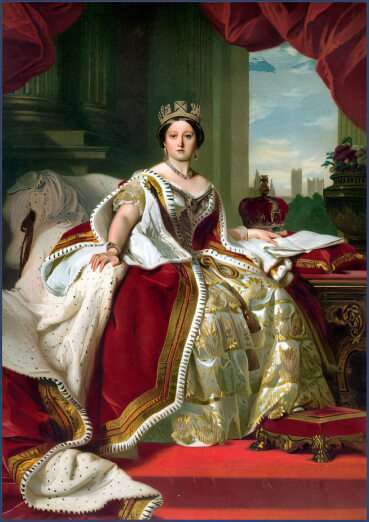
"The important thing is not what they think of me, but what I think of them." --Queen Victoria
"Peggy Olson: The Smuggest Bitch in the World. When a man like Stan Rizzo calls you that, you should go out and buy yourself something pretty as a reward." -- Tom and Lorenzo

Wish I'd heard this back when...
I felt compelled to muse given the renewed interest in vampires via the Twilight phenom, but to my now arguably matured and slightly more pop culture aware eyes, Buffy the Vampire Slayer, the TV show, represents, well, good TV. In a post HBO world, I believe Buffy holds up remarkably well despite the dated references and unique sensibility.
Typically the series was well written, and well paced, with long story arcs amidst lighter yet equally plot propulsive episodes, and always, easter eggs galore. Straddling action, drama, genre, comedy, fan service, you name it... Buffy nailed the cultural, and more often than not lambasted counter cultural angst and infatuations of a rather broad demographic while pandering shamelessly to the unique geeky logic of those worlds. "Once more with feeling" is really something of a miracle, as the characters sing and dance their emotional conflicts in what seems a cogent reflection on what songs in films do exactly and how characters are driven to use them as weapons of expression. Precisely because the show treats it own trashy nonsense as non-sacred, Buffy is something of an anomaly amongst the recent spate of relentlessly over dramatic and unfulfilling dramas re. Trueblood or Vampire Diaries (the Smallville of Transylvania.)
I'm hesitant to write any heavy duty Buffy critique because the scholarship has a long and rich tradition, documented much, much before my own, but the show absolutely invites it. Philosophical exercises on storytelling such "The Body" or indulging in the intellectual maudlin such as "Hush" circumvent the conventions of the show itself and the business of screenwriting in general to the effect of good drama as framed by Mamet, to show, don't tell. In "Hush", a group of scary bald-headed mimes make everyone mute. Without language, the character's are unable to connect to one another and have to find ways to express what they are thinking and feeling, scary in any context, but this frightening prospect of being unable to scream for help is structurally imposed on the audience for 44 minutes of almost total onscreen silence. It's an exacting kind of terror.
The well known fact that Joss Whedon has a preternatural ability to build character through the development of insightful motivation and write witty relevant dialogue, is superseded by his ability to control drama rather than deferring to exposition. He often exposes repressed fears indirectly and suspends clarity or easy resolution in favor of the expressive or unknown. Buffy's fumbling admonition not to move the dead body of her mother, in "The Body" stands in for all the words she cannot literally move. Watching her try to make sense of the situation by wrongly assuming that Glory had come to the house, and her stunned disbelief is filmed in harsh high contrast sunlight. The ensuing cold efficiency... heart-wrenching. The episode is purposely misleading and without scoring, but we feel her confusion and isolation.
Buffy, the show, is smart enough to acknowledge to an extent, the masochism of the horror genre and within the vampire narrative, a particular masochism towards its female characters. However, in eating the cake of personalized girl power, the show's notion of femininity speaks, I think, to turn of the century anxieties that are refreshingly dated in the age of post feminist feminism and the trend of sassy bling/booty style of sexual empowerment. Compare this to the to the highly ritualized fantasia of Twilight with it's serious undercurrent of hidden unhealthy. Meyer's novel equates idolization to love in a thoroughly underhanded way and absolutely nails (to her credit) the essence of hormonal desperation. Sunshine, predating Twilight's heavy fisted teen bodice ripper, is less immediately successful than my most beloved Robin McKinley novel, The Hero and the Crown, but illuminates what is possible in the genre given some creativity and nice prose. McKinley, routinely constructs strong unconventional heroines within the context of beloved fairytales or fantasy tropes. Her formula, and she is formulaic, relies on character rather than plot and reads slow, but always reacts from within the layer of anxiety inside the fantasy and not construct the fantasy itself.
After watching so much digitized torture porn or avant death, where gore is used as an end rather than a means, it's easy to be distracted (or bored) by the shiny plot box (ahem, Lost, and Dan Brown. Really, you don't want me to get started...) and ultimately desensitized. Whedon is unafraid to go "there", into the fantasy, meaning to tap the real sentiment behind Bram Stoker's undead incubus and the original anxiety that such a rapist metaphorically cultivates. In Buffy's universe, blood and violence signifies actual pain and inspires real terror. Refer back to the violent culmination between Buffy and Spike of their abusive relationship, or the invasive seductions of Count Dracula. Even when there is no overt violence, the continuity of the metaphor always acts within the internalized logic of the Buffyverse. In "The Body", when a long term character suddenly and inexplicably passes away, images of the lifeless corpse shown in progressive states of decomposition are cut between reactions of grief. The juxtuposition highlights a basic fear of death, and the inability to face the prospect of a violated human consciousness. Bloodlessness, to paraphrase Spike, is Death.
In retrospect, the wierd spaghetti western of spacepunkyness that is Firefly, seems a culmination of lessons learned from Buffy; that sharp, come-to-a-standstill punchline delivery, dialect, cadences, the hearts and horrors of evolving complex character archetypes. Season Four's Riley, even foreshadows, albeit less cynically or interestingly, the character of Mal. I admit, I slept on Firefly at first, which looked from the marketing to be a bad Farscape clone (Farscape being kind of bad already), but I came around. Critics complained that Firefly wasn't connected to current events enough, a la BSG, but does everything have to be about 9/11? I disagree on the grounds that Whedon knows his soft sci-fi and always goes straight for those sentiments, humanity and all that. The ill fated lifespan of Firefly is perhaps a boon for the legacy, forever a capsule of Joss, the auteur, at his best and most consistent.
Thematic continuity is a lesson that the sloppy writers at the Heroes conference table failed to learn in their haste to make the action slap happy. The premise of a superhero stuck between the demands of real life and the supernatural? Done before and unfortunately for them, done better. Maybe I'm just out of touch and people don't have as much angst these days, but isn't Syler a little one dimensional despite his mom issues? I get the feeling these writers never actually experienced any issues at all and thought some secondhand psychological twists would explain things just well enough to get to the next CG effect. Nathan Fillion as a misogynistic evil priest, the sadistic bounty hunter Jubal Early, Chiwetel Ejiofor as an honorable self sacrificing Operative playing for the wrong team? More shades of the big bad please, Mr Whedon.
Typically the series was well written, and well paced, with long story arcs amidst lighter yet equally plot propulsive episodes, and always, easter eggs galore. Straddling action, drama, genre, comedy, fan service, you name it... Buffy nailed the cultural, and more often than not lambasted counter cultural angst and infatuations of a rather broad demographic while pandering shamelessly to the unique geeky logic of those worlds. "Once more with feeling" is really something of a miracle, as the characters sing and dance their emotional conflicts in what seems a cogent reflection on what songs in films do exactly and how characters are driven to use them as weapons of expression. Precisely because the show treats it own trashy nonsense as non-sacred, Buffy is something of an anomaly amongst the recent spate of relentlessly over dramatic and unfulfilling dramas re. Trueblood or Vampire Diaries (the Smallville of Transylvania.)
I'm hesitant to write any heavy duty Buffy critique because the scholarship has a long and rich tradition, documented much, much before my own, but the show absolutely invites it. Philosophical exercises on storytelling such "The Body" or indulging in the intellectual maudlin such as "Hush" circumvent the conventions of the show itself and the business of screenwriting in general to the effect of good drama as framed by Mamet, to show, don't tell. In "Hush", a group of scary bald-headed mimes make everyone mute. Without language, the character's are unable to connect to one another and have to find ways to express what they are thinking and feeling, scary in any context, but this frightening prospect of being unable to scream for help is structurally imposed on the audience for 44 minutes of almost total onscreen silence. It's an exacting kind of terror.
The well known fact that Joss Whedon has a preternatural ability to build character through the development of insightful motivation and write witty relevant dialogue, is superseded by his ability to control drama rather than deferring to exposition. He often exposes repressed fears indirectly and suspends clarity or easy resolution in favor of the expressive or unknown. Buffy's fumbling admonition not to move the dead body of her mother, in "The Body" stands in for all the words she cannot literally move. Watching her try to make sense of the situation by wrongly assuming that Glory had come to the house, and her stunned disbelief is filmed in harsh high contrast sunlight. The ensuing cold efficiency... heart-wrenching. The episode is purposely misleading and without scoring, but we feel her confusion and isolation.
Buffy, the show, is smart enough to acknowledge to an extent, the masochism of the horror genre and within the vampire narrative, a particular masochism towards its female characters. However, in eating the cake of personalized girl power, the show's notion of femininity speaks, I think, to turn of the century anxieties that are refreshingly dated in the age of post feminist feminism and the trend of sassy bling/booty style of sexual empowerment. Compare this to the to the highly ritualized fantasia of Twilight with it's serious undercurrent of hidden unhealthy. Meyer's novel equates idolization to love in a thoroughly underhanded way and absolutely nails (to her credit) the essence of hormonal desperation. Sunshine, predating Twilight's heavy fisted teen bodice ripper, is less immediately successful than my most beloved Robin McKinley novel, The Hero and the Crown, but illuminates what is possible in the genre given some creativity and nice prose. McKinley, routinely constructs strong unconventional heroines within the context of beloved fairytales or fantasy tropes. Her formula, and she is formulaic, relies on character rather than plot and reads slow, but always reacts from within the layer of anxiety inside the fantasy and not construct the fantasy itself.
After watching so much digitized torture porn or avant death, where gore is used as an end rather than a means, it's easy to be distracted (or bored) by the shiny plot box (ahem, Lost, and Dan Brown. Really, you don't want me to get started...) and ultimately desensitized. Whedon is unafraid to go "there", into the fantasy, meaning to tap the real sentiment behind Bram Stoker's undead incubus and the original anxiety that such a rapist metaphorically cultivates. In Buffy's universe, blood and violence signifies actual pain and inspires real terror. Refer back to the violent culmination between Buffy and Spike of their abusive relationship, or the invasive seductions of Count Dracula. Even when there is no overt violence, the continuity of the metaphor always acts within the internalized logic of the Buffyverse. In "The Body", when a long term character suddenly and inexplicably passes away, images of the lifeless corpse shown in progressive states of decomposition are cut between reactions of grief. The juxtuposition highlights a basic fear of death, and the inability to face the prospect of a violated human consciousness. Bloodlessness, to paraphrase Spike, is Death.
In retrospect, the wierd spaghetti western of spacepunkyness that is Firefly, seems a culmination of lessons learned from Buffy; that sharp, come-to-a-standstill punchline delivery, dialect, cadences, the hearts and horrors of evolving complex character archetypes. Season Four's Riley, even foreshadows, albeit less cynically or interestingly, the character of Mal. I admit, I slept on Firefly at first, which looked from the marketing to be a bad Farscape clone (Farscape being kind of bad already), but I came around. Critics complained that Firefly wasn't connected to current events enough, a la BSG, but does everything have to be about 9/11? I disagree on the grounds that Whedon knows his soft sci-fi and always goes straight for those sentiments, humanity and all that. The ill fated lifespan of Firefly is perhaps a boon for the legacy, forever a capsule of Joss, the auteur, at his best and most consistent.
We Americans, we subsidize farming, large mechanized swaths of cotton, amber waves of grain. For decades, this business model has supported a standard of life that in comparison to other countries is remarkable. However, this particular commodity paradigm promotes imbalances in the market. Recently we have been gaining awareness how foodstuff practices for corn and wheat that damage our collective health through additives, obesity, the hidden built in carbon "tax" of transport. We send cotton overseas to India or China where mills and manufacturers make products as fast and cheap as possible, mostly through undercutting their work force. Diminishing product quality back to ourselves below cost, thus undermining localized work force and realizing dwindling returns on salaries and buying power. This is not to mention how much waste the garment industry necessarily produces.
More often than not, we are producing much more basic commodity than we need or the market can bear. Excess raw corn, wheat, and cotton, unable to fetch a price at auction or overflowing from federal reserves, gets dumped on philanthropy markets. Struggling third world countries receive shipments of these commodities, consequently bypassing local marketplaces which do not thrive on government subsidies and thus cannot compete with"free". Used garments are often shipped in masses to these same countries, supplanting local production and consumption of clothing. There's so many leftovers, that these "gifts" are being turned away, sometimes in lieu of more lucrative trash. With the decline of the farming industries, smaller nations are unable to support the livelihoods of their own people. The price of free then, is a cycle of pollution, starvation, dependency, war and ultimately, a bigger market for subsidized products.
This paradigm is nothing most of us don't know. And there's a lot out there on the ethics of the marketplace; human rights, working conditions, poverty, conservation. All valid issues that we usually see as a function of consumer choice beyond these basic commodities, thus the eco-contingencies, the green companies, the charity safaris, and the locavore movement. Although buying smarter, building better, not only food or clothing, but shelter, transportation, and what have you, can never be bad especially in this economy, as far as I can tell, our efforts are focused on remedies with the overall picture of marketplace reality remaining intact. Under the current economic infrastructure and cultural norms, our less palatable option, is to live nothing or buy nothing. Literally, be nothing.
Am I hypocrite? Yes. As an aspiring designer or architect, roadster, foodster, nay, human being, I've had to struggle with the environmental ethics on multiple levels, just as everyone else does. But, a New York Times article reminded me today, that while this particular bottom-up approach may not solve our over-population problems or the very basic ramifications of Capitalism, we can make more drastic sacrifices as a society than switching from Wonderbread to organic whole wheat, or putting down cash for clunkers.
"Corn's Impact on America's Diet, Health and Politics" Mike Pesca, NPR, Nov. 27, 2003
"Is Walmart Good for America?" Frontline, PBS, Nov. 2004
"Farm Living" Andre Martin, New York Times, Feb. 7 2009
Geography 4: World Peoples and Cultural Environments, UC Berkeley
"No Waste Allowed" Sandra Ericson, Threads 149, June/July 2010 - Not mentioned on their website for some reason, but it should be.
Stuff that patchwork quilters already know, but for garments: Timo Rissanen blog, Mark Liu blurb
Upcycling - "New Dress a Day" blog
More often than not, we are producing much more basic commodity than we need or the market can bear. Excess raw corn, wheat, and cotton, unable to fetch a price at auction or overflowing from federal reserves, gets dumped on philanthropy markets. Struggling third world countries receive shipments of these commodities, consequently bypassing local marketplaces which do not thrive on government subsidies and thus cannot compete with"free". Used garments are often shipped in masses to these same countries, supplanting local production and consumption of clothing. There's so many leftovers, that these "gifts" are being turned away, sometimes in lieu of more lucrative trash. With the decline of the farming industries, smaller nations are unable to support the livelihoods of their own people. The price of free then, is a cycle of pollution, starvation, dependency, war and ultimately, a bigger market for subsidized products.
This paradigm is nothing most of us don't know. And there's a lot out there on the ethics of the marketplace; human rights, working conditions, poverty, conservation. All valid issues that we usually see as a function of consumer choice beyond these basic commodities, thus the eco-contingencies, the green companies, the charity safaris, and the locavore movement. Although buying smarter, building better, not only food or clothing, but shelter, transportation, and what have you, can never be bad especially in this economy, as far as I can tell, our efforts are focused on remedies with the overall picture of marketplace reality remaining intact. Under the current economic infrastructure and cultural norms, our less palatable option, is to live nothing or buy nothing. Literally, be nothing.
Am I hypocrite? Yes. As an aspiring designer or architect, roadster, foodster, nay, human being, I've had to struggle with the environmental ethics on multiple levels, just as everyone else does. But, a New York Times article reminded me today, that while this particular bottom-up approach may not solve our over-population problems or the very basic ramifications of Capitalism, we can make more drastic sacrifices as a society than switching from Wonderbread to organic whole wheat, or putting down cash for clunkers.
"Corn's Impact on America's Diet, Health and Politics" Mike Pesca, NPR, Nov. 27, 2003
"Is Walmart Good for America?" Frontline, PBS, Nov. 2004
"Farm Living" Andre Martin, New York Times, Feb. 7 2009
Geography 4: World Peoples and Cultural Environments, UC Berkeley
"No Waste Allowed" Sandra Ericson, Threads 149, June/July 2010 - Not mentioned on their website for some reason, but it should be.
Stuff that patchwork quilters already know, but for garments: Timo Rissanen blog, Mark Liu blurb
Upcycling - "New Dress a Day" blog
laundry paradox = you have no clean pants or underwear but you need to go down 5 floors to the coin laundry so you can do your wash.
also applies to:
A) breadmaking/cooking - when the next bowl you need is the one which contains the product you are making and the other ones all have food inside.
B) you have no money to buy gas because you left your wallet in your SO's bag, and the bag is now 30 miles away and you have no gas to get it.
C) the last bit in solitaire when the card you need is flipped so you can't complete your string.
solution:
a) buy more x, where x = underwear/pants, bowls, etc.
b) stop procrastinating now and not tomorrow
c) play solitaire with real cards so the cheat option is available
d) don't be such a dork
also applies to:
A) breadmaking/cooking - when the next bowl you need is the one which contains the product you are making and the other ones all have food inside.
B) you have no money to buy gas because you left your wallet in your SO's bag, and the bag is now 30 miles away and you have no gas to get it.
C) the last bit in solitaire when the card you need is flipped so you can't complete your string.
solution:
a) buy more x, where x = underwear/pants, bowls, etc.
b) stop procrastinating now and not tomorrow
c) play solitaire with real cards so the cheat option is available
d) don't be such a dork
Recent reading selections led to comparisons between Herbert and Asimov's most respectively famous science fiction series, Foundation and Dune. The novels are structurally similar. Both books center around a messianic figure whose attempt to save humanity is foiled by stagnant government systems and the past. Both authors use pseudo historical quotes to head each chapter and share similar theories about cultural evolution. But while Foundation first posits a positive concept of psychohistory*, Herbert questions the emotional and moral questions that arise and ultimately decides that prediction** is a trap that in limiting unknowns, limits the imagination.
Half a century later, Wired presents the obsolescence of traditional scientific models/methods (empirical and experimental) in favor of statistical data crunching (made possible by computerization) in The End of Theory: The Data Deluge Makes the Scientific Method Obsolete, which sounds an awful lot like the beginnings of a psychohistorical thought machine. During a Calculus class at Pasadena City College, a visiting Cal Tech professor proclaimed in a fit of pique that derivatives "could" be used to calculate probabilities in history in order to apply them to acts of prediction about the future. Max Cohen's maniacal study of stock market algorithms in Darren Aronofsky's Pi: Faith in Chaos is just such an exercise. But the face of "God" hidden in the complexity of mathematical social flux reduces Cohen to a lobotomized zombie in the end. Prediction however remains popular aside from Tarot cards and crystal balls. For 2007 and 2008, US News & World Reports names Actuarial Science and Data Miner on their Best Careers list.
In a way, the statistical view of scientific proof is a nod to the relativist form of reality over the viability of absolute universal law.
In any case, moving from the mechanical quantification model of knowledge to the data accretion model, there is a shift from classical scientific Western inquiry of truth finding, or the workings of things, towards experience and recording of occurrences as truth making. The laws of Feng Shui derive from projecting an outcome through observation over a relatively long and documented period of time. Such and such a thing (a beam often falls on the bed beneath it during an earthquake) is observed to be true, so that the truth becomes law (do not sleep beneath a roof beam), which engenders more proof for the original truth. In a traditionalist society like ancient China, such determinism is not a wholly supernatural act but one that over time has become mythologized Today an admonition about sleeping under beams seem more like a mix of city planning then cultural superstition. Nevertheless, such an example hold seeds of self fulfilling prophecy, a method of data accretion that has in a way become culturally "universal truth".
The conceptual shift from scientific to data methodology is also discussed in in modern psychology (as well as the Wired article.) In the mind, dealing with the complexity of life renders "disordered" states which involve mental paralysis or an existential query that force one to give up on scientific proofs in favor of data gathering as a palliative for the human condition. The outcome is a perfection sensual/sensory intake and a "Live on the surfaces," and "Take reality at face value" approach as an alternative to hypothetical or idealogical abstractions. Instead dealing with the unknown is a situationally postmodern though process. No longer the question How? or even Why? But only that "it" (the thing questioned) "Is", which reminds me ironically of certain Christian proofs of God, even down to the idea that a human being cannot control the outcome of such knowing, only live with it's effects. However, statistical views of reality, in prioritizing the interpretation and efficiency of systems, might also hinder imaginative conjecture, the basic quantum by which curiosity or scientific inquiry begins.In a way, the statistical view of scientific proof is a nod to the relativist form of reality over the viability of absolute universal law.
In any case, moving from the mechanical quantification model of knowledge to the data accretion model, there is a shift from classical scientific Western inquiry of truth finding, or the workings of things, towards experience and recording of occurrences as truth making. The laws of Feng Shui derive from projecting an outcome through observation over a relatively long and documented period of time. Such and such a thing (a beam often falls on the bed beneath it during an earthquake) is observed to be true, so that the truth becomes law (do not sleep beneath a roof beam), which engenders more proof for the original truth. In a traditionalist society like ancient China, such determinism is not a wholly supernatural act but one that over time has become mythologized Today an admonition about sleeping under beams seem more like a mix of city planning then cultural superstition. Nevertheless, such an example hold seeds of self fulfilling prophecy, a method of data accretion that has in a way become culturally "universal truth".
But what does all this have to do with Asimov and Herbert? You need a big computer to assimilate such huge loads of information, and Herbert argues, what bigger computer is there than the human brain? The experiential takes on a spiritual dimension in Dune that is particularly alluring, mostly because it transcends all material aids for thinking. Whatever the allure of prescient ability, the most fascinating aspect of all this is a sense of convergence between diametrically opposed ideologies, a blurring of lines between the cause effect of knowledge and thinking. In dealing with the limits of language, knowledge, memory, time, or faculty, the Asimov/Herbert paradigm show bifurcations between two views of reality (Western and Eastern*** as well as other such oppositions) that are not perhaps as dissimilar as once thought.
*a mathematical analysis of social interaction to extrapolate statistical data in order to build a LPS model (least possible simulation model) which in turn can be used to reveal the probable affect/effects of any given social phenomenon. The goal is to foretell the future and forestall doom.
**psychohistory as carried out to a logical endpoint. by non-computerized means, the intuitive processes of the human mind (such as weighing the various aspects of design problem and coming to a satisfactory if not perfectly ideal solution) expands so that the analytical faculties necessary for calculating infinite quantities (including all permutations of time events) is possible. humans, in herberts conception, are limited from messianic power only by mental faculty and lack of knowledge. To some degree Herbert's psychohistorical prediction depends on an analysis that operates only in subconsciousness and reminds me most of Eastern religious world-views.
***Buddha's take on Creationism.
"On the philosophical level, both Buddhism and modern science share a deep suspicion of any notion of absolutes, whether conceptualized as a transcendent being, as an eternal, unchanging principle such as soul, or as a fundamental substratum of reality. Both Buddhism and science prefer to account for the evolution and emergence of the cosmos and life in terms of the complex interrelations of the natural laws of cause and effect." -- Dalai Lama
